Identify the reference
Add a clear photo or product link, then confirm the brand, model, reference and condition details Pieces can identify.
 PIECESGet the app
Watch collection tracker
Pieces keeps references, purchase prices, estimated market ranges and watch P&L together, from a first daily watch to a multi-brand collection.
Get the appAdd a clear photo or product link, then confirm the brand, model, reference and condition details Pieces can identify.
Review public asking prices and available completed-sale evidence behind the estimated market range.
Follow total estimated value, invested amount and changes without building a spreadsheet.
Select watches by closet, value or individual piece and make a shareable portfolio card.
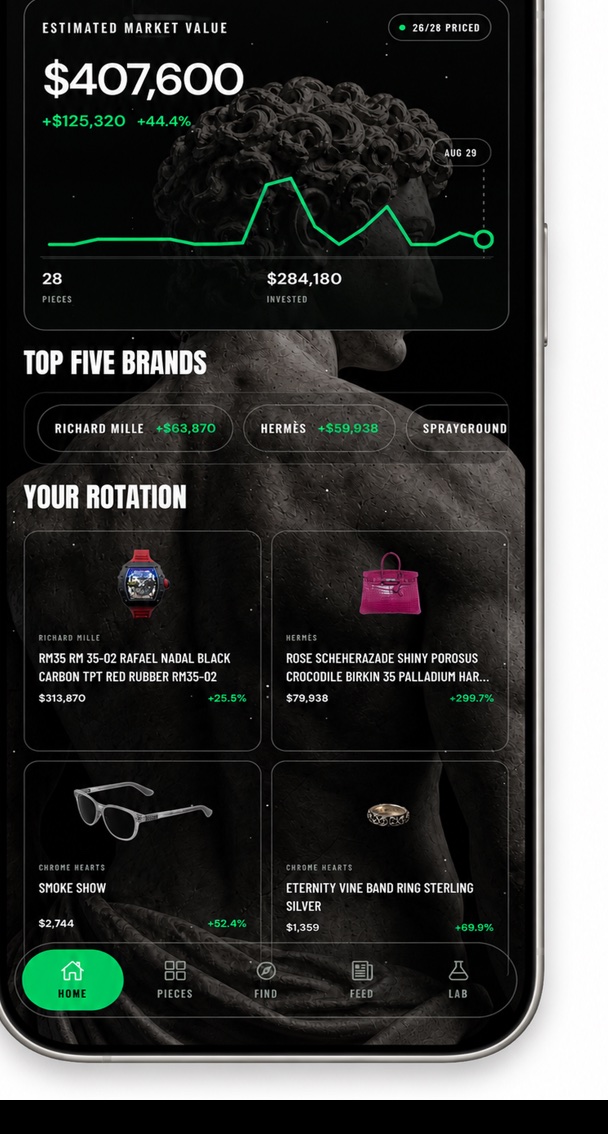
Two watches with the same collection name can have different cases, movements, dials or bracelets. Before comparing prices, make the record precise enough to tell your watch apart.
The market value and resale price guide explains those differences. For the collection total, follow the P&L calculation examples; the same distinction between an estimated gain and actual sale proceeds applies.
If you want a record of what you own and what you paid, an inventory or collection app can help. If you need movement accuracy, wear history or service reminders, look for a watch-specific tool that explicitly supports those needs. Pieces focuses on mixed collections and informational portfolio value; it does not offer a watch service log or movement-accuracy tracker.
A useful collection record lets you distinguish exact references and configurations before relying on a price comparison. For a Rolex collection, our Rolex tracking guide walks through model references, included accessories, private documents and the difference between a gain estimate and a realized sale.
Pieces lets you organize categories in closets and select pieces for a collection P&L card. Keep your original purchase amounts separate from estimated values. If a watch has no matching evidence, leave the comparison unresolved; do not use the price of a similar-looking expensive reference as a substitute.
A personal inventory can help organize records, but it does not establish insurance coverage or replace a professional appraisal. Ask your insurer or appraiser what evidence they require. Do not publish full serials or receipts in public collection images.
Watch portfolio FAQ
No. Pieces provides informational estimates from available public evidence. It does not guarantee authenticity, condition, liquidity or a final sale price.
Yes. Pieces is designed for mixed collections across Rolex, Cartier, Patek Philippe, Audemars Piguet, Richard Mille and far beyond those examples.
Yes. You choose profile and closet visibility. Purchase price, receipts and private photos remain outside public closet projections.