Catalog every piece
Add one photo, paste a product link or import a batch. Organize pieces by brand, category, closet and ownership status.
 PIECESGet the app
Designer closet tracker
Keep designer clothing, bags, jewelry, shoes and accessories in one digital closet. Record what you paid, review estimated market values and build a shareable profit-and-loss (P&L) card.
Get the appNow available for iPhone on the App Store. You can try the website P&L demo now.
Add one photo, paste a product link or import a batch. Organize pieces by brand, category, closet and ownership status.
Keep what you paid private. Compare it with an estimated value while you own the piece, or the recorded sale amount after you sell it.
See available public listings, market range and confidence instead of a price with no explanation.
Select a whole closet or individual pieces, choose a backdrop and create a card ready to share.
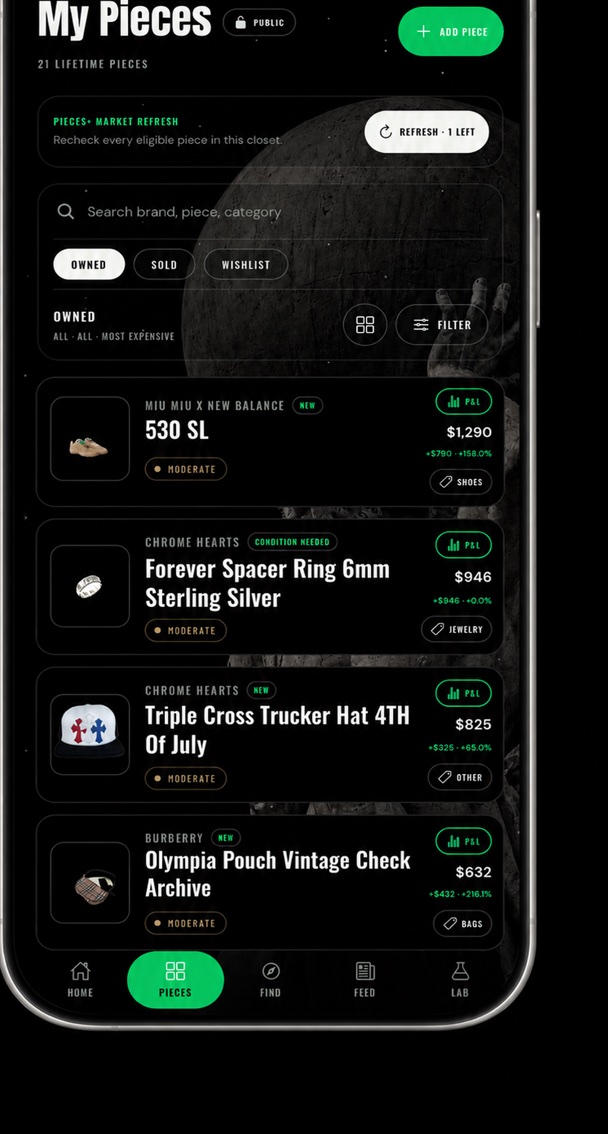
A useful designer wardrobe inventory starts with recognizable records. Try a jacket, a bag and a pair of shoes before working through the whole closet. Use the free closet inventory template if you want to organize the details first.
The wardrobe cataloging guide expands this checklist. Then use the closet value guide to review estimates without overwriting what you actually paid.
A wardrobe planner answers what to wear. A collection tracker answers what you own, what you paid and what available market evidence says about it. Choose the first if your priority is outfit calendars or styling suggestions; Pieces focuses on the second and does not promise an outfit planner.
If you collect limited-release tees, hoodies and caps, start with the streetwear inventory guide. It explains labels, release identity, duplicate pieces and bundle costs. For rings and chains alongside your wardrobe, use the personal jewelry catalog guide.
Yes. Start with a photo, the identity you can verify, size and condition. A missing market estimate is not a zero-value item. You can preserve your purchase record and research a comparison when you have enough detail.
Use an app when browsing item photos on your phone and reviewing a mixed collection matters. Use a spreadsheet when a simple custom list is enough. Our app versus wardrobe spreadsheet guide explains the trade-offs; the free inventory CSV is a standalone spreadsheet, not an app import promise.
Designer closet FAQ
A piece is something worth tracking: archival denim, a designer jacket, a rare bag, jewelry, sneakers or any item that matters to your collection. It does not need to be from a specific brand.
No. Pieces organizes identity and public market evidence, but it does not provide professional authentication or appraisal services.
Purchase prices, receipts and private photos are not included in public closet projections.